


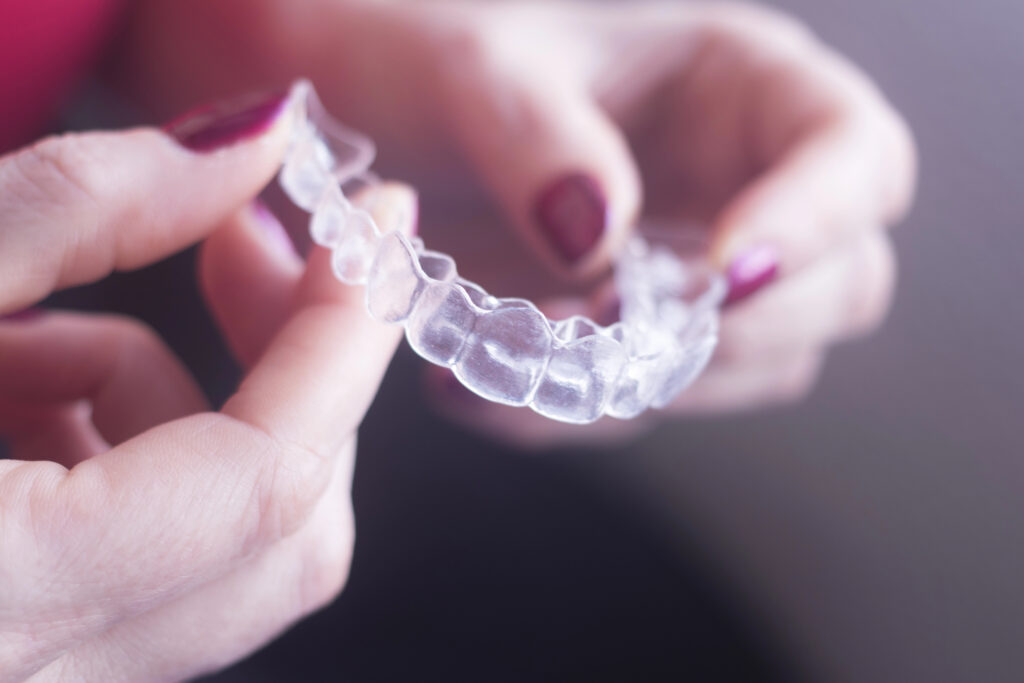
Despite the huge popularity of Invisalign, many myths still float around. By learning the truth about these common misconceptions, we can provide a clearer picture of what to expect from clear aligner treatment.
Myth 1: Invisalign Can Only Correct Mild Issues
Many patients believe that clear aligners only work for minor adjustments. While this may have been true in the early days of aligner treatment, new advancements have significantly expanded the effectiveness of Invisalign on tougher cases.
Today, we can effectively treat a wide range of orthodontic problems, including severe crowding, spacing, overbites, underbites, and crossbites. Advanced features like attachments allow the aligners to exert the necessary force for complex tooth movements.
Myth 2: Invisalign is Only for Adults
While clear aligners are extremely popular among adults, they are also highly effective for teenagers as well. Invisalign is custom-sized, so it works for any age that is ready for treatment and can be made to accommodate molars that are still growing in.
The biggest potential pitfall for younger patients is compliance. Be sure your teen knows they must wear their aligners for 20-22 hours every day for effective treatment.
Myth 3: You Don’t Need Retainers After Treatment
Some patients believe that retainers are only for after braces treatment. This is incorrect. Teeth have a memory and will naturally tend to shift back toward their original positions over time, regardless of the method used to straighten them.
Whether you use braces or Invisalign, wearing a retainer is a necessary part of maintaining your results for the long term. However, the good news is that your Invisalign retainer will be just like your treatment trays, and will likely only be required at night.
Myth 4: You Can’t Eat Certain Foods
With traditional braces, patients must avoid sticky, hard, or crunchy foods that could damage brackets and wires. One of the primary benefits of Invisalign is that the aligners are removable. You take them out before every meal and snack, meaning there are no dietary restrictions.
You can continue to eat all of your favorite foods, just be sure you brush before putting the aligners back in, and make sure to wear your aligners for the full recommended amount of time each day.
Myth 5: Mail-Order Aligners Are Just as Good
Direct-to-consumer aligner companies market themselves as a cheaper, more convenient alternative to in-office treatment. However, orthodontic treatment is a medical procedure that is best done under close professional supervision.
Mail-order options often lack the comprehensive X-rays and regular progress checks necessary to ensure the best and safest treatment. Professional oversight helps prevent complications that could lead to tooth damage or gum issues.
Myth 6: You Only Need to Wear Them at Night
Effective tooth movement requires consistent pressure applied slowly and steadily over time. Aligners must be worn for 20 to 22 hours per day. Wearing them only at night does not provide enough time for the teeth to move effectively or for the bone to remodel around the new tooth positions. Failing to wear them for the recommended time can stall progress or even cause the teeth to relapse.
Myth 7: It Takes Longer Than Braces
The duration of orthodontic treatment depends on the complexity of the case, not necessarily the method used. In many instances, Invisalign treatment times are comparable to, or even faster than, traditional braces.
Myth 8: It Is More Expensive Than Braces
Cost is a significant factor for many patients. While Invisalign was once significantly more expensive than metal braces, the price gap has narrowed. Today, the cost of clear aligners is often comparable to traditional orthodontic treatment. The final price depends on the length of treatment and the specific needs of the patient, rather than the type of appliance chosen.
Myth 9: Insurance Does Not Cover Invisalign
Many dental insurance plans include orthodontic benefits that apply to clear aligners just as they do to metal braces. If your plan covers orthodontics, it will typically pay a percentage of the cost. It is helpful to review your specific policy details or ask your dental office to perform a benefits check to understand your coverage.
Myth 10: Treatment Must Be Done by an Orthodontist
While orthodontists specialize in tooth alignment, many general dentists are certified Invisalign providers. General dentists undergo specialized training to plan and oversee clear aligner therapy. Choosing a general dentist for this treatment can be convenient, as it allows you to handle your cleanings, check-ups, and orthodontic care in one location with a team you already trust.
If you have questions about Invisalign treatment, reach out to schedule a consultation today. We are here to dispel myths and answer all your Invisalign questions.